Backcountry Camping
1. The Experience:
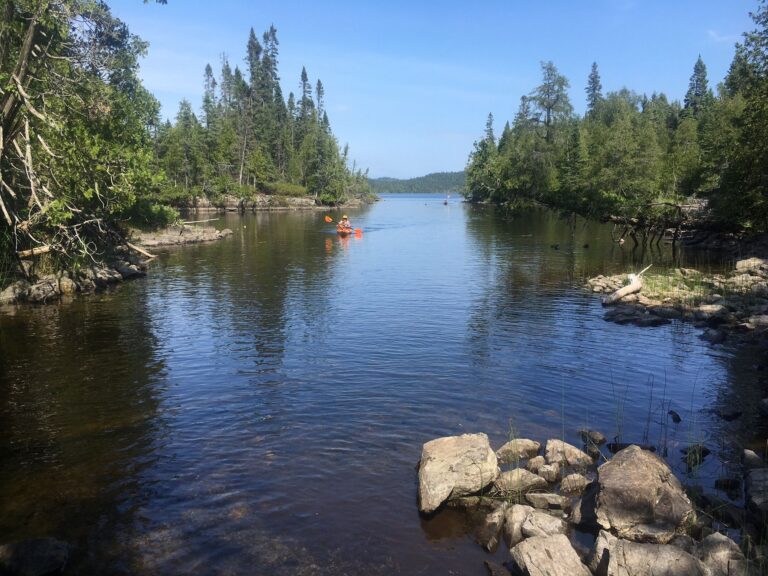
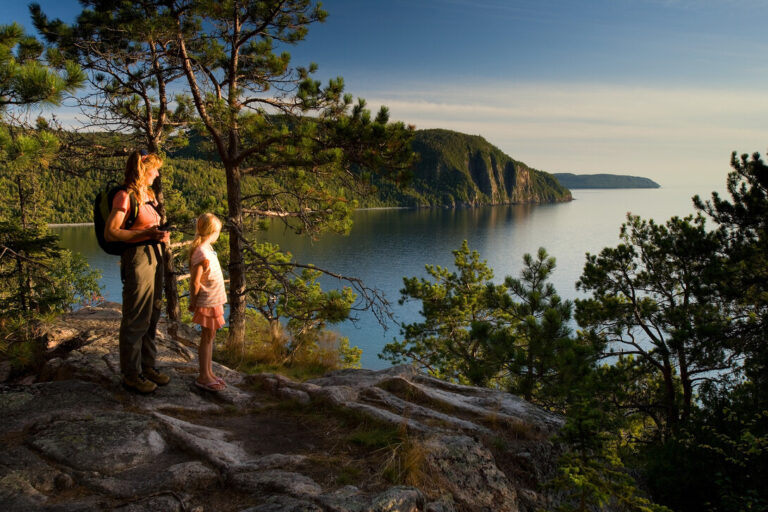
The backcountry of Lake Superior Provincial Park provides access to numerous hiking and paddling opportunities which vary from easy day trips to multi-day adventures along the dramatic coast of Lake Superior.
Lake Superior Provincial Park is known for its 150 km of maintained canoe routes and 130 km of hiking trails.
Eleven hiking trails let visitors explore the landscapes that make up Lake Superior – rocky shores, beaches, lakes and rivers, forests, wetlands, and rolling hills. Fall hiking is popular when the leaves change, and the hills become alive with colour.
Fishing is a popular activity at Lake Superior. The park boasts a fine Brook Trout fishery, plus opportunities for Lake Trout, Rainbow Trout, and Salmon.
There are 163 backcountry campsites in Lake Superior Provincial Park which are divided into 76 zones. All zones have designated campsites with access to box privies. Some campsites have designated metal firepits.
Campsites on some of the more popular backcountry areas, such as Mijinemungshing Lake, come with a picnic table. Several backcountry campsites along the Coastal Hiking Trail are equipped with a food locker.
2. Reservations and Interior Camping Permits
Hiking or Paddling: Zone-specific reservations are available online or by phone up to five months in advance of arrival.
Reservations are recommended to secure your backcountry campsite.
Interior camping permits are required for backcountry camping at Lake Superior Provincial Park.
If you print a copy of your reservation confirmation letter before arrival, you may proceed directly to your access point. You will be required to display your reservation number on your vehicle’s dash and keep a copy of the confirmation letter with you while in the backcountry.
If you do not print your reservation confirmation letter in advance, you will need to pick up your permit at the park before proceeding to your access point. Refer to Table 1 for in-park permit pick-up locations. Interior camping permits may be purchased at the park, where availability exists. Refer to Table 1 for in-park sales locations.
3. Trip Planning
A map of Lake Superior Provincial Park is available for purchase online. Refer to Table 1 for in-park map purchase locations.
Backcountry access points are located at Agawa Bay, Sinclair Cove, Sand River, Katherine Cove, Coldwater River, Orphan Lake Hiking Trail, and Gargantua Road. Additional access points for paddlers include Old Woman Bay and Michipicoten Bay/Michipicoten River.
Please carefully review your planned trip before making a reservation. It is your responsibility to ensure you can safely complete the trip.
There is a ban on cans and glass bottles (all non-burnable food or beverage containers) in the backcountry of Lake Superior.
To prevent the introduction of non-native species, the possession or use of live baitfish within Lake Superior is prohibited. Additional special fishery regulations apply to some lakes in the park. For more information please refer to the most current Ontario Fishery Regulations Summary.
Outboard motors, including electric motors, are not allowed on interior lakes, but are allowed on Lake Superior.
For more information about Lake Superior and local outfitters, click here.
Please be respectful of the natural environment and other visitors. Practice leave-no-trace camping, camp only on designated campsites, and be aware of your surrounding neighbours, ecology, and wildlife. We appreciate your efforts to maintain this pristine environment.